

This Archive Is Keeping Your Record Too
If you have ever felt the gap between the work you get paid for and the work that actually makes you — this archive is keeping that record. If you have ever been in a room and done the invisible thing that held it together while someone else got the credit — this archive is keeping that record. If you have ever wondered whether the messy, unmeasured, undocumented parts of your life and work actually mattered — this archive is keeping that record.
Field Notes exists because that record belongs to all of us. Your patronage is how it keeps growing.
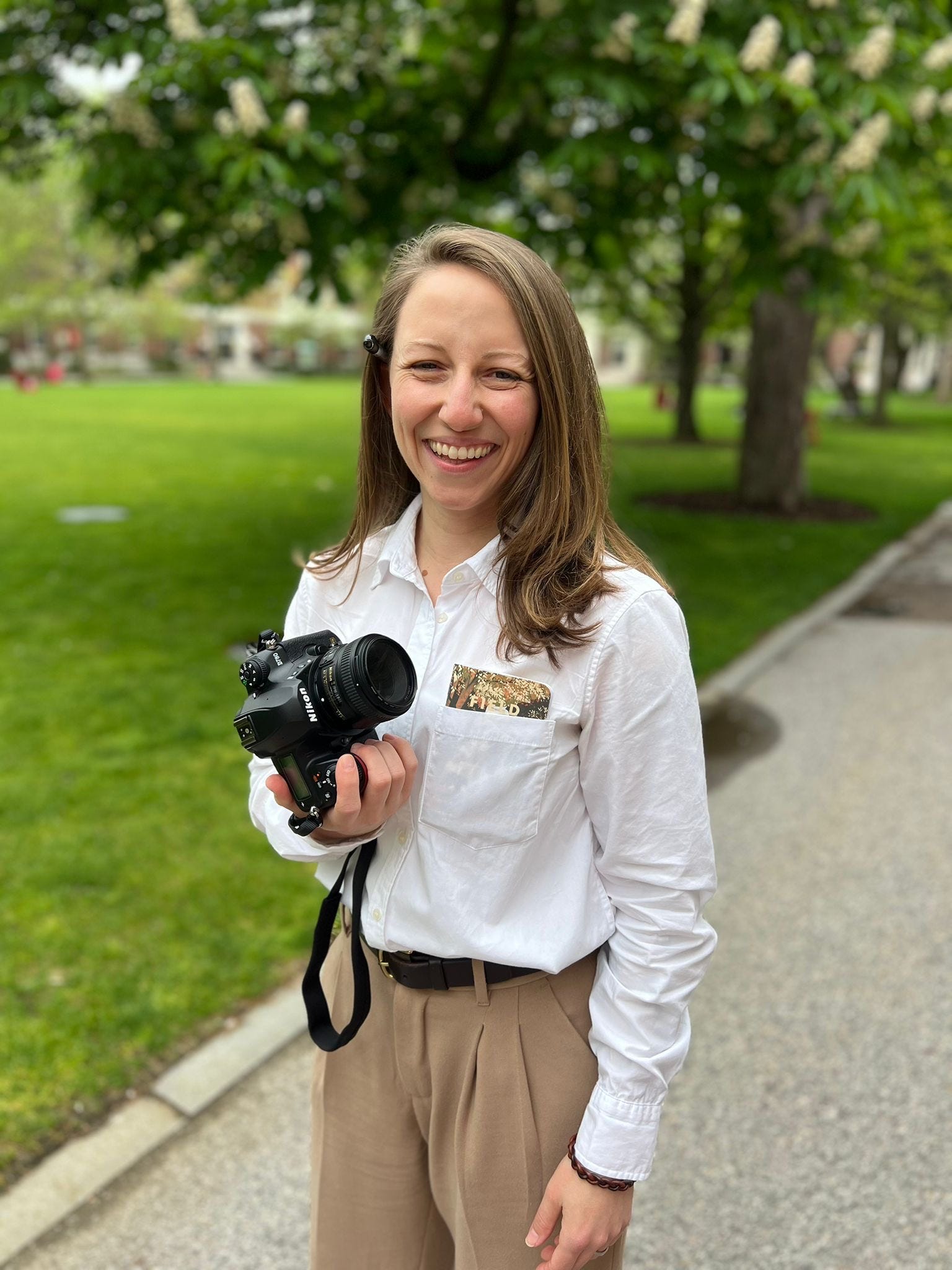
Today is my birthday. The best gift you can give me is becoming a patron of this work.
The way in is wherever you are.
How to Become a Patron:
Upgrade to Friends of Field Notes: You fund the archive. You receive The Dispatch: private reflections, extended Spoken Records, voice notes, and behind-the-scenes audio from inside the practice. Access to the Field Notes Community Chat with weekly prompts to name your own unseen work. A digital Field Note Journal to start keeping your own records in real time. Join the Community
Founder Session — $2,500. You fund the archive and you become part of it. One full Field Notes session: portraits, a Spoken Record told in my voice from your life, and a Frame. The whole methodology, witnessed and kept. NYC based. DM with questions. Book Your Session
Join the Patron Circle: You underwrite the archive at scale: you or your company can sponsor one Field Note, three, eight, or an entire chapter of the Human Record Join the Patron Circle.
The Moment I Understood What I Was Doing
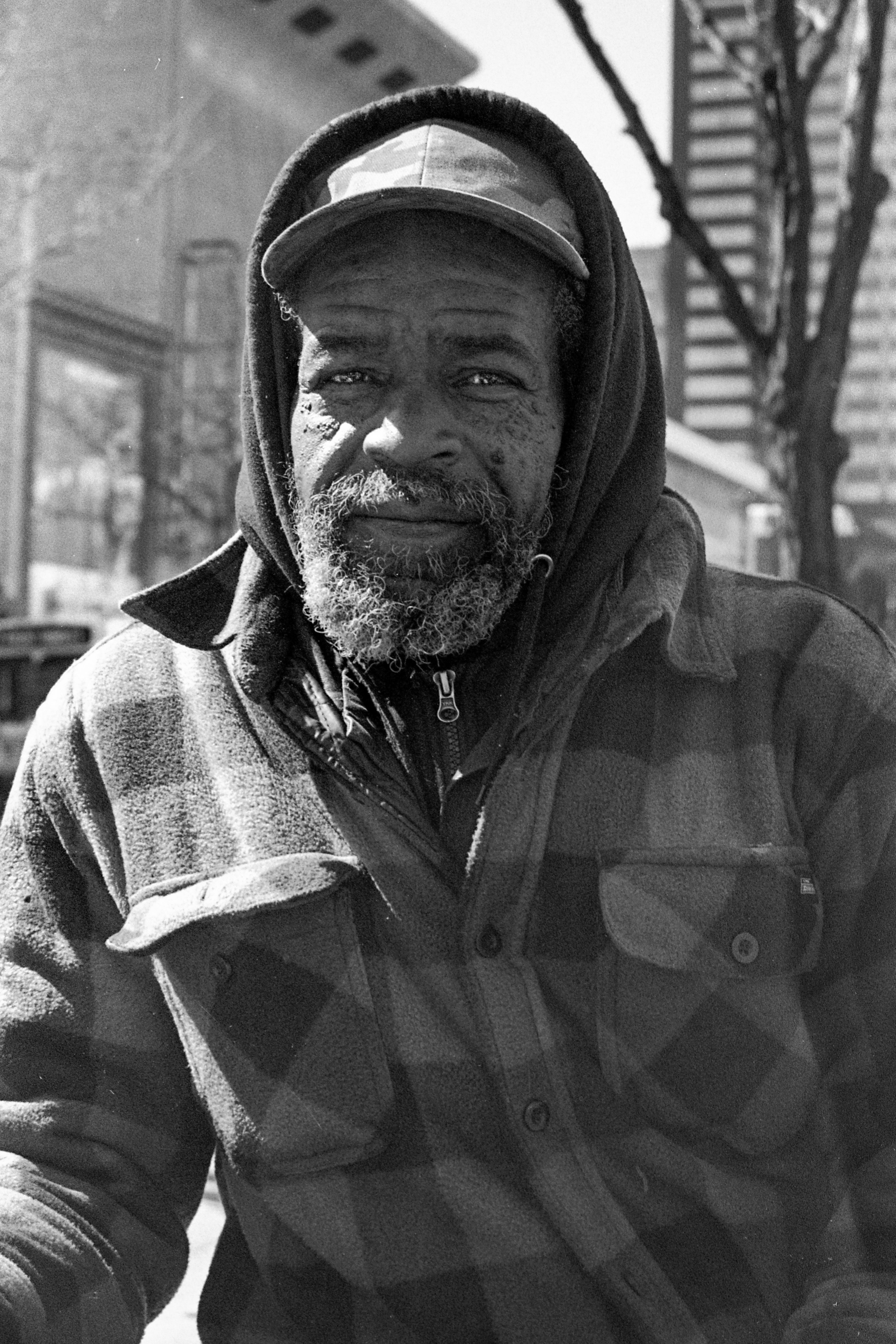
I was a freshman in college, walking through Philadelphia, when I saw a man sitting on top of an electrical box.
His eyes stopped me.
I had a camera I was still learning to use and a semester of street photography that had been keeping me together while I fell apart in private. I was struggling with depression for the first time in my life — calling my mom from my dorm room sobbing, finally asking for help. And somehow, in the middle of all of that, I kept going outside and walking toward strangers.
I walked up to him and said hello. He wasn’t sure of me. He told me he was a veteran. I stuck out my hand.
I’m 5’2”. I’ve always been an athlete. My handshake is firm in a way that tends to catch people off guard. I don’t know if it was the grip or just the gesture, but something shifted in his face. A recalibration. He shook back. We talked. I asked if I could take his photo. He said yes.
That was the moment I understood what I was actually doing — and it had everything to do with people.
The difference between being looked at and being seen lives in whether you extend your hand. Whether you make contact before you make a request. Whether you are willing to be surprised by who shows up when you do.
I have been building a practice around that difference for fifteen years. Field Notes from the Work and the Wild is what it became.
Every session begins with one question: When do you feel most like yourself? The body answers before the words catch up. From that conversation — two, sometimes three hours inside it — three things emerge: a portrait, a Spoken Record told in my voice from the subject’s life, and a Frame that holds them together. A record that a person existed beyond what they produced, held complexity beyond what they performed, and mattered before anyone was watching.
Fifty sessions. Thirty-six Field Notes published. Two TED talks. A living archive growing since March 2025.
The first patron found me before I thought to ask. And what happened next is why I am writing this today.
How Field Notes Got Its First Patrons
It was October 2025. I was covered in thirty years of someone else’s dust.
We had just moved into our new place in the Bronx. Walls half-primed. Everything mid-becoming. My phone buzzed with an email from a woman named Juhi.
We had met for coffee three weeks earlier. Two women with squiggly careers, sitting across from each other at a table in Midtown, recognizing the invisible labor in each other before we even got to Field Notes. By the time I walked her through the work she already understood it. She had been living the thesis her entire career. She just hadn’t had words for it yet. Now she was writing to say she wanted to be a patron. She sent me money the next day — a decision that the work deserved to exist.
A few months later, the 5x5 Collective came in together. Then more than twenty people contributed what they could to a GoFundMe — some gave twenty dollars, some gave two hundred. Twenty people became paid Substack subscribers. None of them were asked to give a specific amount. All of them made the same decision: this matters, I want it to keep going, here is what I have.
That is a year of people deciding what deserves to exist. And it sits inside a much longer history of who gets to make that decision.
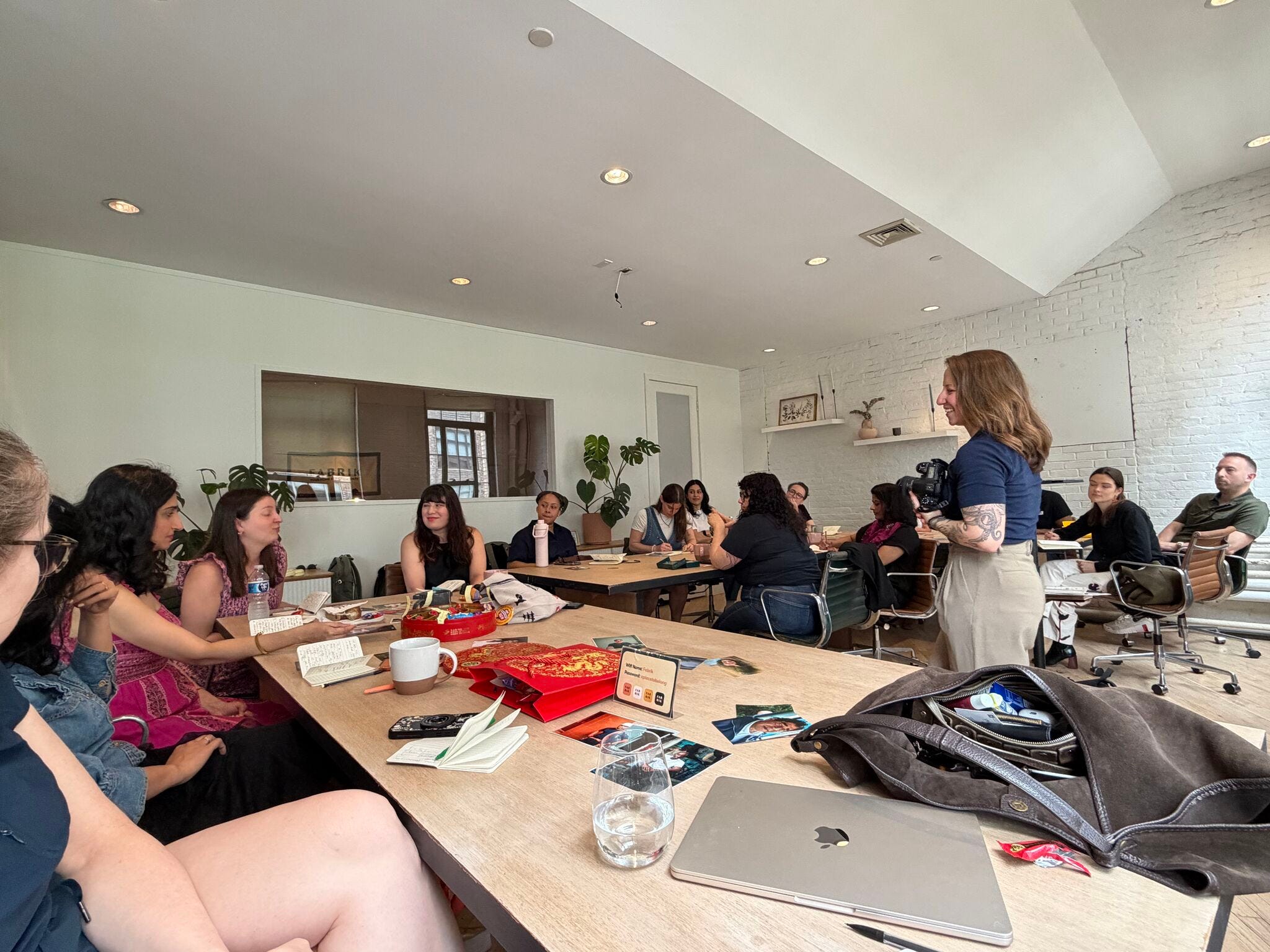
Patronage has belonged to the wealthy for most of recorded history. The Medicis funded Michelangelo. Robber barons built the concert halls. Foundation boards with their naming rights and their galas decided which archives survived and which ones vanished. The people with the most resources determined what the culture kept. Everyone else showed up to consume what had already been decided for them.
Field Notes is a practice built on the conviction that the choosing belongs to all of us.
Every session, every portrait, every Spoken Record is a decision to keep something the official story skips. The invisible labor. The permission moment. The human economy running beneath the one that gets measured. Your patronage — at whatever level, in whatever form — is how that decision keeps getting made before the record closes without us in it.
Juhi made that decision in October before anyone asked her twice. So did the 5x5 Collective. So did the person who gave twenty dollars on GoFundMe. So did the twenty people paying eighteen dollars a month on Substack.
You have been making it too. Every time you read a Field Note and felt something true in it. Every time you came to a workshop and stayed in the room for ninety minutes with strangers and left different. Every time you sat across from the camera and answered honestly and let me keep what you said.
You are already inside this work. This is your invitation to go deeper — because right now, the stakes for doing so have never been higher.
Why This Moment Is Urgent
The NEA is being gutted. The Institute of Museum and Library Services — the agency that funds community archives, oral histories, and local memory projects across every state — was zeroed out. The Smithsonian is under pressure. The record of this moment is being actively shaped by people with the resources and the motive to shape it a certain way.
The record will look like them — unless we build something else.
Your patronage is that decision. A counter-move. And Field Notes is the vessel built to hold it.
What Field Notes Is Actually Building
Ursula K. Le Guin had a theory about tools. She said the first important human tool was the bag — something to carry things in. To gather, hold, bring home. Before the tool that forces energy outward, we made the tool that brings energy home.
A resume is a spear. Linear, pointed, built around a single outcome. It records what you produced and leaves everything else on the ground.
Field Notes is a bag. It holds what the resume drops: the years of preparation, the moments of permission, the invisible labor behind every visible result. Everything that made you who you are before anyone was watching.
This archive is that vessel. It carries the lineage of Studs Terkel, the WPA Federal Writers’ Project, and StoryCorps forward — at the exact moment that lineage is most urgent.
Your investment funds the archive itself. The body of work accumulating into something that will outlast this moment. The sessions that continue, the Spoken Records that get made, the portraits that go on the wall. The practitioners who will eventually carry this methodology into communities, organizations, and cities I will never personally reach. The institution Field Notes is becoming — one that exists beyond any single person’s labor, holds the human record with permanence, and grows for the next twenty years at minimum.
What’s Coming: Field Notes LIVE and Beyond
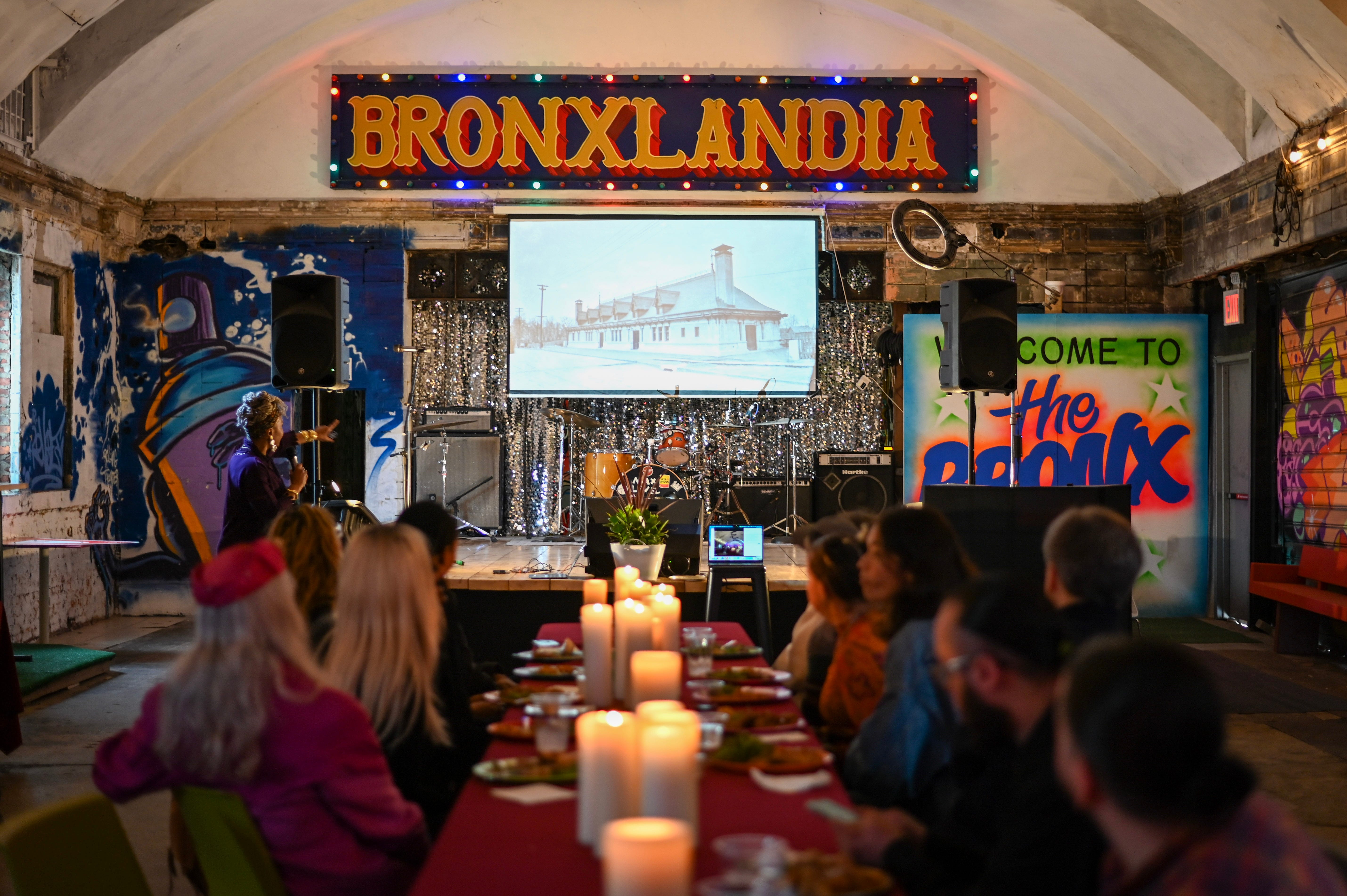
On September 26th, at Bronxlandia in the South Bronx — a former rail station in Hunts Point — Field Notes comes into a room for the first time at scale. Field Notes LIVE: The Human Record. One hundred and fifty people who shape culture, community, and commerce across New York City spend a full day inside one question. Large-format portraits from the archive on the walls. Spoken Records performed live. A living index card wall built in real time by everyone in the room. Music throughout. A closing witness. Every person walks out holding something physical. Every person carries the archive forward.
Beyond September: a Field School that trains practitioners to hold this methodology in new rooms. An annual gathering where everyone who has ever been part of the ecosystem comes home. A Human Record that becomes the documentary evidence of what it actually meant to be a person doing work in this time in history — the full record, complex and plural, kept the way Le Guin kept her carrier bag.
I gave back-to-back TEDx talks in February with a two-month-old at home. I came offstage knowing the work was real. I came home and kept going. That is what it means to decide that the human record matters enough to build it without waiting for permission or a paycheck. Someone has to do this work. If the people building the archive are only the ones with the most resources, we already know what gets kept. I am writing this on my birthday asking you to be part of what we keep instead.
With gratitude,
Lindsey
PS: Subscribe to Field Notes for documentary conversations, portraits, Spoken Records, and reflections on invisible labor, identity, creativity, burnout, belonging, and becoming.
PPS: Upgrade to Friends of Field Notes for access to The Dispatch, weekly prompts in the chat, and the digital Field Note Journal to help you document your own process in real time.
Founding Members can participate in their own Field Note experience. NYC-based. Travel not included. Reply to this email with questions.


