


It’s a Thursday night at one of those networking events.
There’s free wine, a panel nobody asked for, and a name tag I’ll forget to peel off until I’m halfway home on the 1 train. A woman turns to me with her plastic cup and asks how I am. Before I can answer, a man cuts in.
“How are you?!”
“Oh my god,” she says. “Slammed.”
“Same,” he says. “Insane.”
And they’re both smiling. Busy is a disease, New York networking events are the epicenter, and everyone in this room is bragging about their symptoms.
I know the symptoms well. These days my title is Unproductivity Expert. (Yes, really. Stay with me.)
But I used to be the sickest person in the room, and I was very proud of it. This week I found the medical records.
I was scrolling back through the notes app on my phone and there they were: 50 notes, one for every day of a summer I spent on tour in 2017. I hadn’t read them in nine years.
So, let me take you there.
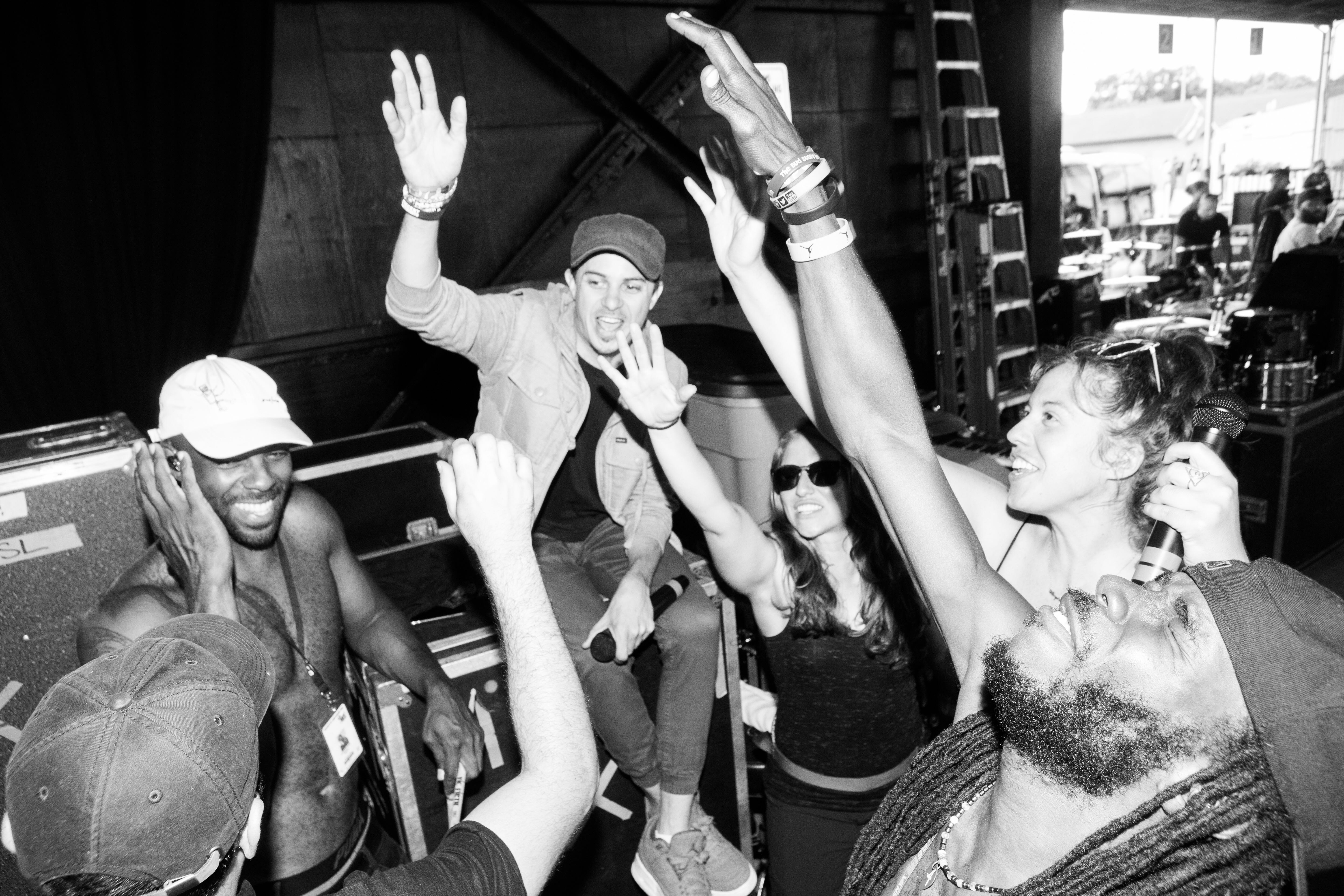
It’s 2:45 in the morning, and I’m working out. In a few hours I’ll get on a plane with, and I’m quoting myself here, “significantly too many stops and layovers.” Then a van. Then a tour bus. Then fifty days of Vans Warped Tour, working for a rapper named George Watsky. I got this job because someone told George he was impressed by my hustle.
I took that as the highest compliment a person could get. I would have worn a sign with it. In fact, a year later it was on the wall of my production space.
Before I leave for the airport, I write my first note: For the first time in years I woke up with 0 thoughts in my head, because I know if I had any thoughts in my head I would not be getting up at 2:45 to work out.
Zero thoughts, on purpose.
I had figured out that my own thoughts were dangerous, and that the way to outrun them was to keep moving. By noon I’m sprinting through Midway airport, bag slamming against my hip, to make a connection. By dinner I’m driving a van across the desert with both hands locked on the wheel. At 11:50 that night I’m lying in a hotel bed in Arizona, heart going like I’m still sprinting, and I write the last note of the day: attempted to pass out, but way too anxious.
Twenty hours of zero thoughts, and then they all showed up at once. They always do.
They wait until you stop moving.
Reading that now, I can see what I couldn’t see then. Every job has two layers. There’s the work you can see: the flights, the load-ins, the to-do list. All of the things that make us busy.
And there’s the work beneath the work: what you’re feeling, what you’re noticing, who you’re turning into.
Layer one always wins, and there’s one simple reason.
Nobody can see thinking, so we measure motion instead.
Nobody can see thinking. So we measure motion instead.
You can’t watch someone have an idea. You can’t watch someone figure out what they feel, or who they’re becoming.
So we count what we can see: emails sent, hours logged, how few hours you slept.
A little over a hundred years ago, a man named Frederick Taylor stood in a steel mill with a stopwatch, timing men with shovels. (I read up on him this week, and it made me want to throw up.) We never put the stopwatch down. Motion became the proof. “Slammed” became the most respectable answer to “how are you.”
And feelings got the worst of it, because feelings don’t move at all. They just sit there in your chest, asking to be felt. Somewhere along the way, we learned to treat them like a malfunction. Something to manage, push through, or keep out of the meeting.
“Be professional. Toughen up.”
I learned that lesson so well, I did it to myself in writing.
In that first note, a few lines down, I admit I’m going to miss my girlfriend and my dog, and then I call myself “an absolute baby” for it.
Three weeks later, I’m working under a tour manager who is, to put it kindly, a lot.
She never stops moving, she never rests, and she can’t stand it when anyone else does either. In one twenty-minute conversation, she threatens to fire me THREE times. I counted. My stomach is in a knot, my head is pounding, and what I write down that night is: I really hate having so many negative thoughts.
Someone threatens my job three times in twenty minutes, and the problem I find is me, for feeling something about it.
That’s what the 2:45 workout was for. My feelings were the work beneath the work, and I’d been taught they were in the way.
But that summer kept trying to slow me down and make me notice that second layer. It sent me three invitations to stop. I turned down the first two.
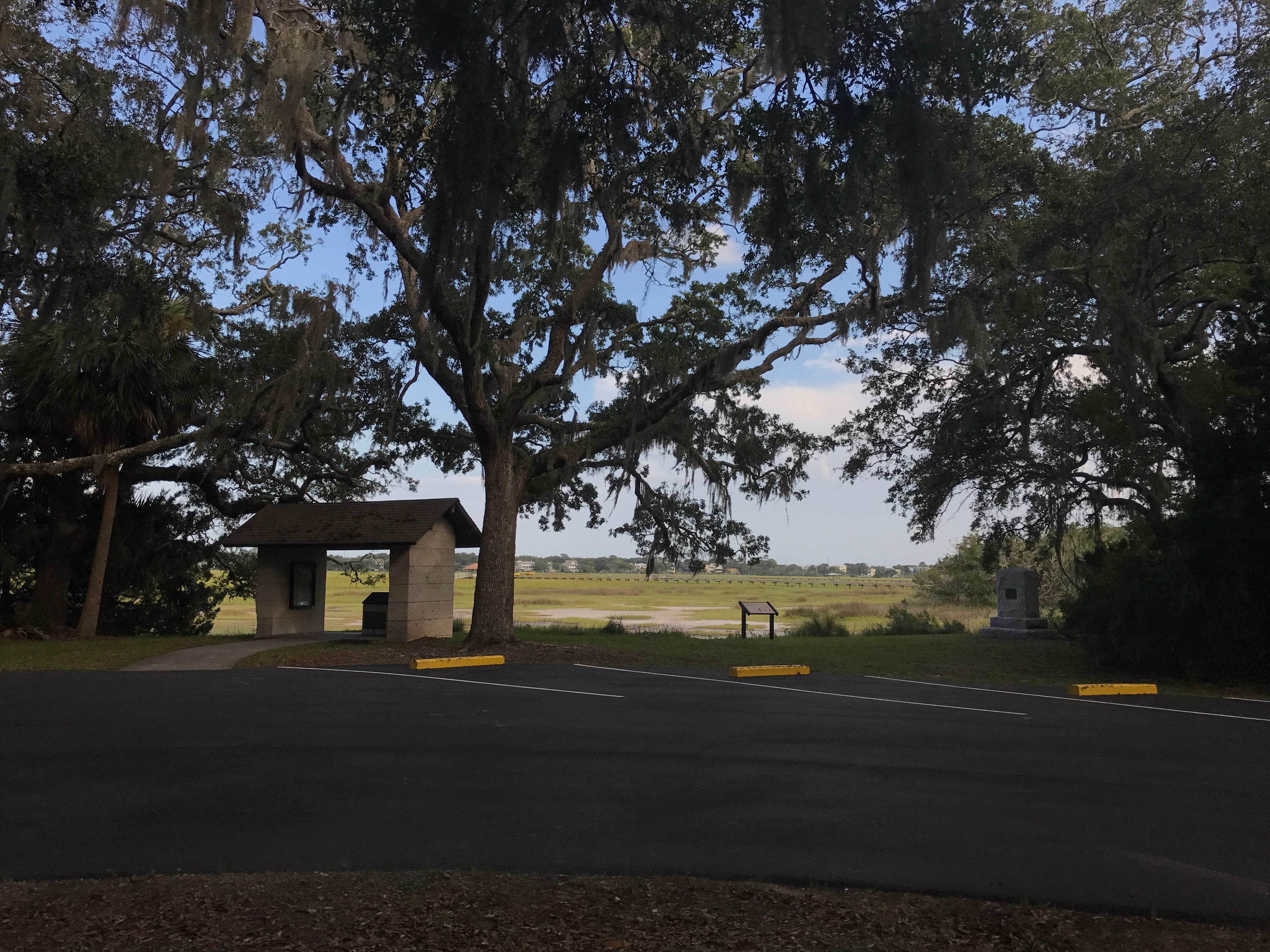
I’m lying in a hammock tied between two trees at a place called Bloody Marsh, on St. Simons Island, Georgia. It’s day fifteen, our first real off day. Nobody needs anything from me. Nothing is on fire.
And I hate it.
My shoulders are up around my ears. I keep reaching for my phone. Nothing. Put it down. Pick it up. Still nothing. In my head it’s a full press conference:
What if George needs something?
It’s an off day, Lindsey.
What if the bus leaves?
It’s an off day. The bus isn’t going anywhere.
What if everyone finds out I’m just lying here?
It’s an off day.
So I stare at the water, because there’s nothing else to do. And I stare at it some more. And somewhere in there, without asking my permission, my shoulders drop. My breathing slows down. I simmer. I stay there all afternoon.
That’s the first invitation. That night I write: I found it interesting that I felt so invigorated after spending time alone.
I even write that I’ve been thinking about leaving the money-heavy music industry and just living out of a hammock.
Then I get back on the bus.
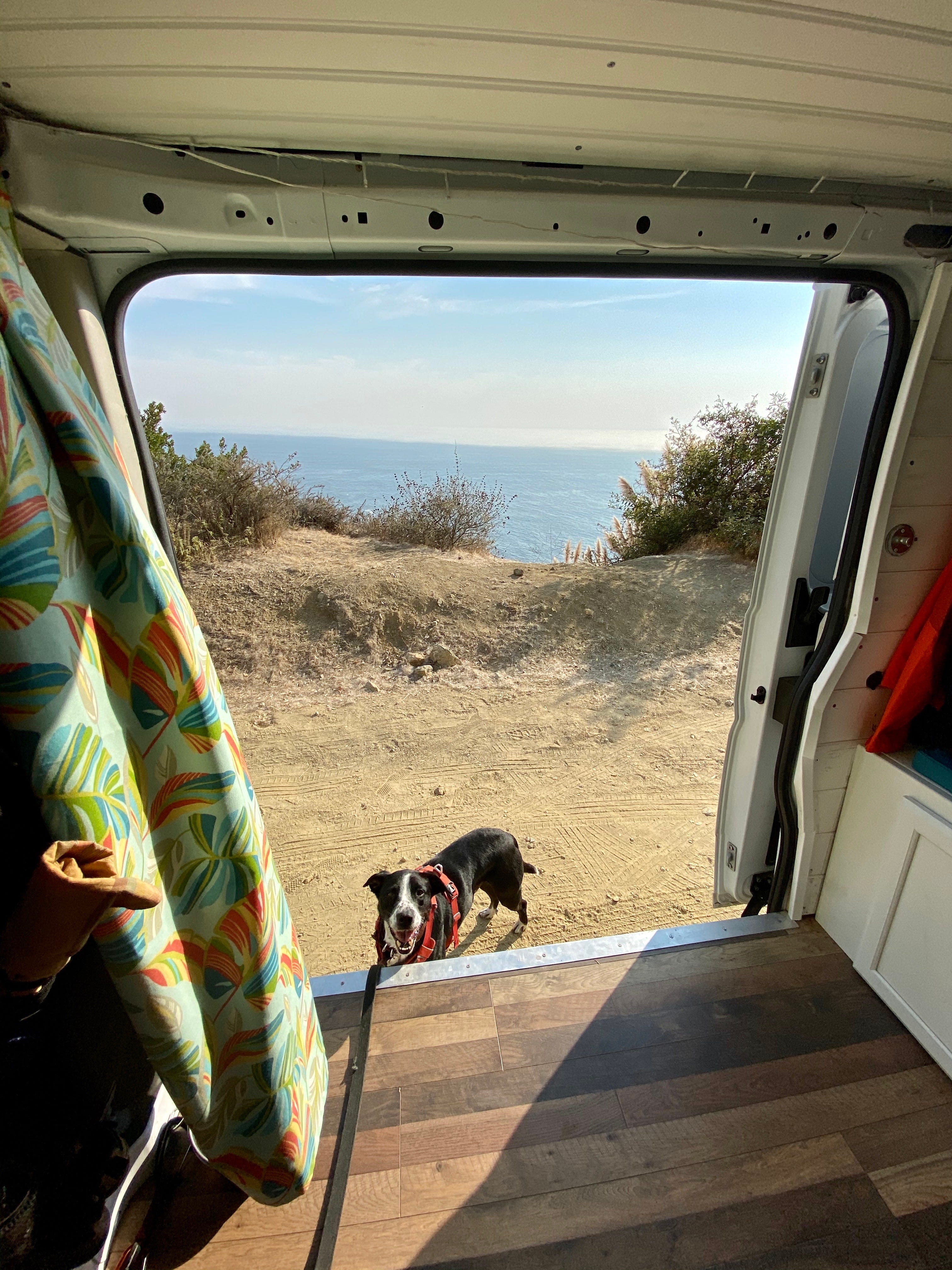
Two years later, I bought a van and lived in it for a year. It took me two years to hear my own note.
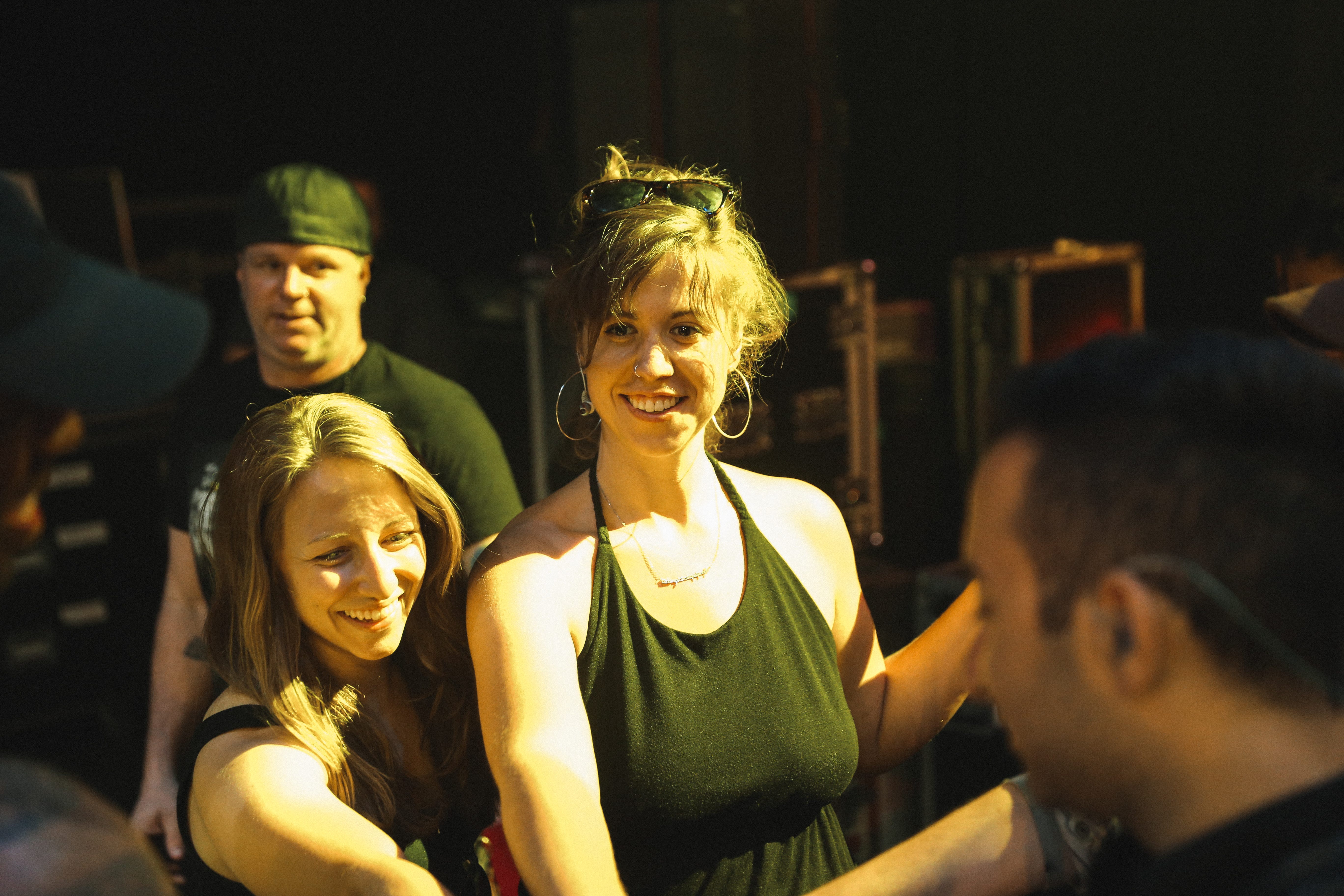
It’s late on day 22, and I’m walking back from the showers with Camila, the band’s singer. Our hair is wet, the lot is full of buses, and somewhere a band is still sound-checking.
Camila stops walking. She tells me to stop too. To look around. To notice how cool this is, what we’re actually getting to do, and to appreciate it.
That’s the second invitation. And my whole body says no. My jaw tightens. My feet want to keep walking. That night I write that it kind of rubbed me the wrong way.
It took me nine years to see why, and the reason is right there in the same note, a few lines down. I write that I really miss my people at home, and that I never realized how much of a community I had there until I left. If I stopped and looked around, I’d have to feel how far away everyone I loved was. So I kept walking.
It’s day 32, and I’m crying in my bunk. The curtain’s pulled shut, and the bunk is the size of a coffin, so there’s nowhere to put the crying except my pillow. By now I’m the tour manager. I was hired to do a little of everything, and now I do all of it. I have never been so useful in my life.
My note that morning starts: It’s 11:34 a.m. and this is the first time I’ve gotten to write anything down.
So I do what always works. I get up and I work out. And then I write four words that stop me cold nine years later.
It did for a minute.
For a minute. 32 days in, the thing I’d been using to outrun my feelings finally stopped working.
That night Levi, our photographer, drives us to his parents’ house so I can take a real shower. (After a month of tour showers, this is basically a spa.) Afterward, we go out to the backyard, lie down on his trampoline, and look up at the stars. The trampoline sags under us. Nothing gets fixed and nothing gets solved. I lie there on my back, looking up, and for the first time all summer, my body stops bracing.
It’s enough.
That’s the third invitation, and it’s the first one I stop for.
On day 49, the last day of tour, I write: I have no idea why, but it’s 5:30 a.m. and I am wide awake and smiling from ear to ear. Same early morning as day one. No workout. No zero-thoughts strategy. Just awake, and smiling so hard my cheeks hurt.
And on day fifty, on the flight home, I fall asleep on someone’s shoulder. To clarify, who I don’t know.

It’s Friday night in the Bronx. On the table are my grandmother’s Shabbat candlesticks. They’re brass, they’re covered in old wax, and polishing them has been on my to-do list for a very long time. (The Unproductivity Expert, everybody.)
There’s a pizza box on the counter, because Friday is Pizza Friday, and before anyone touches a slice, we stop.
I light the candles, and I wave my hands over the flames three times, the way I watched my grandmother, my Bubbie, do it my whole life. I can feel the heat on my palms.
I never knew what it meant until this week, when I finally looked it up.
You’re gathering the light toward you. You’re pulling the day of rest into your body before you say a word. Then I say a short prayer to myself, for the weekend and for my family. And it turns out women in my grandmother’s corner of the world did the exact same thing for hundreds of years, in Yiddish, over candles just like these. Their prayers had a name: tkhines. I’d been saying one every Friday without knowing it.
There’s one more part of the ritual I learned this week. In the tradition, you light the candles first. Then you cover your eyes and say the blessing. And only after that do you uncover your eyes and look at the light.
That summer, I did it backwards. I kept my eyes wide open and never stopped moving, and I missed almost everything. The light was burning the whole time. It was in the hammock, on that walk back from the showers, on a trampoline in somebody’s backyard. I just had to stop long enough to see it.
Now, every Friday night, I practice the thing it took me fifty days and nine years to learn. Stop first. Close your eyes. Then look.
Abraham Joshua Heschel, the rabbi who marched with Dr. King at Selma, called Shabbat “a palace in time.”
One day a week, built for stopping. My ancestors were keeping it thousands of years before anyone sold a planner.
So here’s what I’m asking of you this week.
Find one hour you can’t justify.
A walk, a hammock, a trampoline. Leave it empty, and see what shows up.
What’s been waiting for you to stop moving?
Until next time.
Stop fixing, start flowing.


